Night VFR training

While some sleep, the others are messing with night landings… But why??? 🙂

Actually it was a quite long day and somehow I was thinking it would be better to have a bed on board of the Piper… So I took my first coffee this year (yes, this year, as I don´t drink coffee 🙂 ) and we have started to go through all the preparations with my instructor.

Back to basics - flight preparations...

Back to basics – flight preparations…

Due to some bad weather at Tenerife North aiport (GCXO) we had to change our initial plan and we have decided to go to Lanzarote (GCRR). I was actually quite happy about the fact to land there for the first time in my life, but I was concerned as well, as this would be my first flight to this destination without having seen this airport during the day. Nevermind, the instructor is sitted next to me and he knows the airport (and we have Garmin430 and AirnavPro as well 🙂
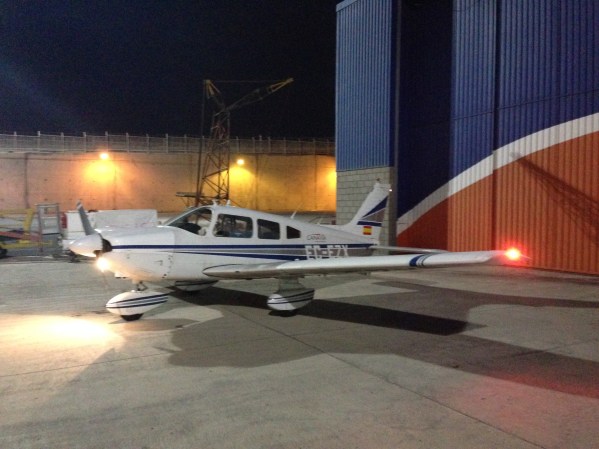
Checking all the lights during the outside check

Checking all the lights during the outside check

We have checked MET, TAF and NOTAMs and went down to the the apron. After the preflight check we were ready to go. I like to record my flights and to see them later, to learn from my own mistakes, but unfortunately I haven’t noticed until the way back that I left the lens cap on my Gopro… Grrrrr! My landing at Lanzarote was not the best one (we all love bounced landings!!! 🙂 ), so I don´t need to have this recorded :-).

We have departed as usual on Runway 03L and after departure we have turned right to the NE point. Under normal circumstances we should fly bellow 1.000 feet, but to be honest in the night I didn´t like the idea, so we have requested to climb to FL 095 immediately after the departure. As there was no traffic, we were authorized by the ATC able to climb at our discretion. We had some nice tailwinds as well which gave us some nice groundspeeds of around 117kts… Lucky!!! 🙂

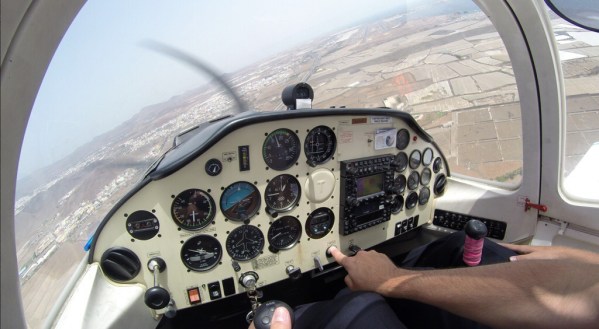
I mix this course a bit with my basic instrument flight module, therefore my departure was not visual and I was practically flying until reaching our cruising altitude without looking outside the window… At this altitude I have discovered, that even between the islands over the Atlantic Ocean, there are some visual references, which can help to guide me to the destination.

The view from up there is simply beautiful, and I am starting to love the flying at night!

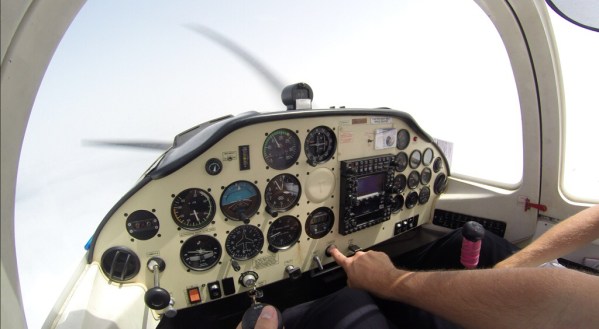
Getting closer to our destination, we have started our descent at 500ft/minute, which made us even faster. Reaching Sierra point at Lanzarote should be at 1.000 feet, but I didn’t like the idea to fly so low over the sea without having some good references nor to have the runway in sight. Therefore we have requested to proceed to the long final, which was authorized by the ATC prior holding over Sierra point at 3.000 feet. This was great, and I used the opportunity to open the window and make some pictures of Playa Blanca at night. The traffic in front of us showed me as well where the airport was, another great help at night! 🙂
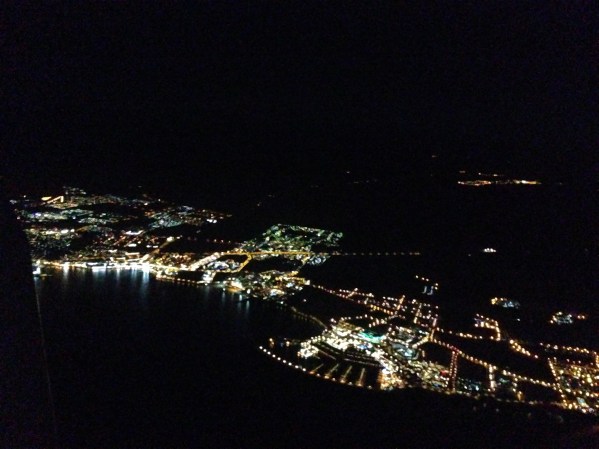
Playa Blanca at night

Playa Blanca at night

If I wouldn’t have forgotten to take off the lens cap, I would have some nice pictures of the runway at Lanzarote as well, but unfortunately I only have this one made by my phone:

Final RWY 03 at Lanzarote

Final RWY 03 at Lanzarote

The approach was very good, but it is still difficult for me to guess the right height of the plane above the runway to start the flare; nevermind, I´ll find it out! After the touch and go we have returned back to Gran Canaria at 6,500 feet to avoid the wind which we had on the way to our destination.

Arriving at our destination I have requested to proceed to long final again, to not to fly at 1.000 feet above the sea. The ATC was nice and maintained our altirude of 5.000 feet until the LPC VOR, where we should hold until cleared of traffic. We were holding there for 4-5 minutes, in the meantime they were vectoring some 737´s bellow us to the airport. Awesome to be hanging over them in the air! 🙂

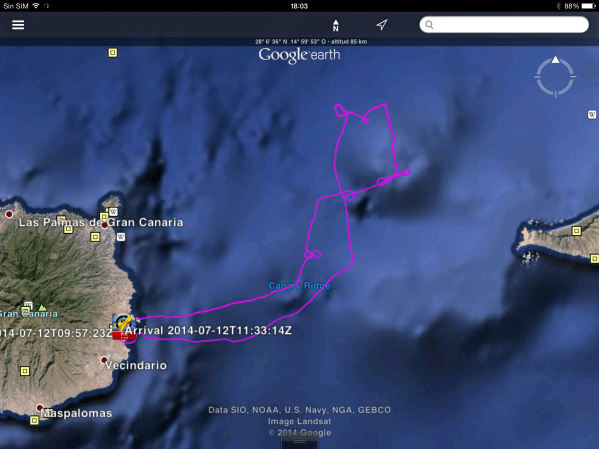
I have no idea about IFR holding patterns, so we did it together with my instructor. Basically, he was telling how to fly and I had no idea what I was doing… But anyway, it looks nice on the map:


Holding over LPC VOR

Holding over LPC VOR

I always like to practice something new. After a couple of minutes we were cleared to land on RWY 03L, the wind was 030/14kts, so very good flying conditions at the end.

Final RWY 03L at GCLP

Final RWY 03L at GCLP

And finaly you can see the only video recorded that night; landing at Gran Canaria´s El Gando airport. Safe flights!

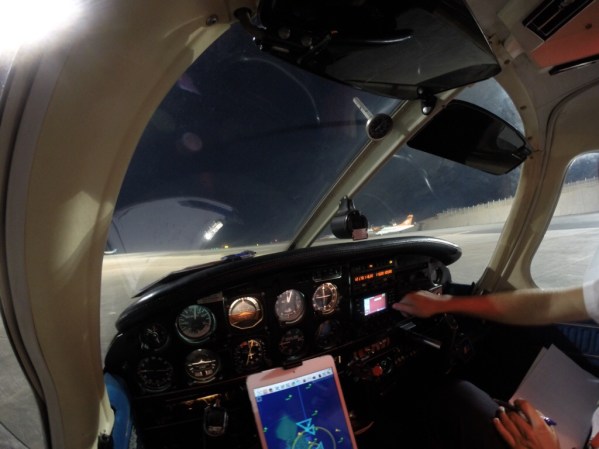


Night VFR experience

In addition to my basic instrument flying module I have decided to add a night VFR rating. Basically it is complicated to fly night vfr in Spain, you need to request some 10-14 days in advance a permission, which has to be granted and than you are allowed to fly during the night. So basically even if you have the rating, you are not allowed to land after sundown, only if you have a special permission by the authorities… Spain is simply different. Even our first training flight had to be cancelled because the ATC told us that the permission issued by the authorities was not complete… So the FI had one week to clear all the necessary paperwork and it seemed our permission was ok, only there was some misunderstanding… Finally we got to the plane, which was after a regular check, so everything was in perfect state, except the landing light seemed to not be working… It seemed we had to cancel our flight again. But luckily we had the maintenance guy with us, so he was able to fix the problem and we were ready to go.

Getting our landing light fixed

Getting our landing light fixed

The taxiing was quite easy, there was sufficient light outside.

Taxi via Juliet to the holding point of the RWY 03L

Taxi via Juliet to the holding point of the RWY 03L

In the cockpit there was of course less light than during the day, so this was already the first difference. Engine run-up, all the checks following the checklist we were cleared to line up and wait on the runway 03L.

Line up and wait 03L, Canavia 71

Line up and wait 03L, Canavia 71

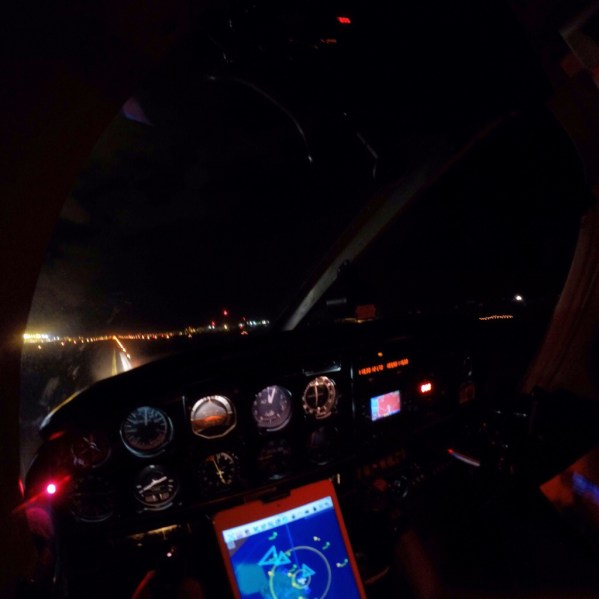
The things started to get more serious, haha. The big question was: how is going to be once in the air? The clearance for takeoff came from the tower, so the answer on my question was not far away… Full throttle, paramaters in green, speed alive, rotate into the night. Looking more inside on the instruments than outside; for correct speed, climb, altitude… 500 feet, flap 0, fuel pump off, landing light off and following right turn into the dark. Strange thing is, you don’t realize how deep the darkness bellow the plane is… On the top of that, we had to hold over the bay during the first circuit, so I had to watch the instruments to make a couple of 360 degree turns without seeing any light. I thought always, that from the circuit the runway light could be seen, but they are not! The first 2 circuits were a bit more complicated, but after that I started to get to used to it… When turning on base, lights of some villages could be seen which was really a nice feeling to get again some visual references…

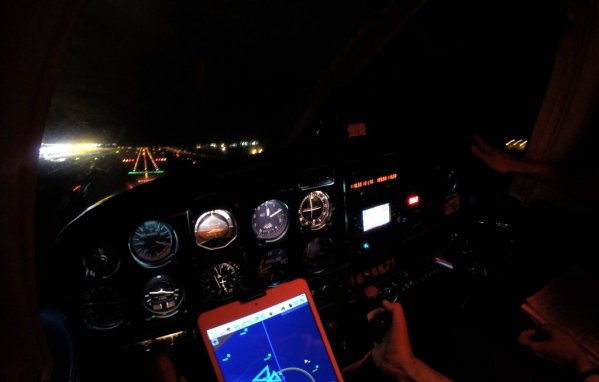
Final Rwy 03L

Final Rwy 03L (night VFR)

There was a wind from the north between 20-25 knots, which gave us 11 knots crosswind component during the approach and the landing on the RWY 03L. It complicates the practicing of the landings in the night a little bit. Or better said quite complicated… I was hoping to have winds calm as it should be in the night, but it was not the case this time :-). There was also a turbulence bellow 300 feet on final so it was tough work to keep the plane leveled. Crosschecking the instruments, ILS, speed, horizon getting safe on the ground. Hovewer the landings were not so great as I would have expected. Still have 3,5 hours to fly, and I already look forward to it! Finaly I made 12 landings (without counting the bounced ones, lol), and made these with the plane this beautiful drawings on the screen of my ipad:

Today’s flight…

Today’s flight… 🙂


After my first successful night flight

After my first successful night flight


Safe landings!

Flying in Istria

I was just on holidays in Croatia with my family on the part called Istria. Istria formed eaerlier a part of Italy and you can clearly see the ‘touch’ of the italian architecture on the buildings, cities and villages.
The nature is very green, the sea blue (as it should be 🙂 ) and there are also some nice small islands not far away from the coast which would be nice to see from the air.
Before we went down I made a small investigation on internet about the flying clubs, possibilities, etc. The information found on internet about flying in istria was equal O, or very poor information in croatian, which doesn’t help a lot. If you are not on internet, you doesn’t exist!
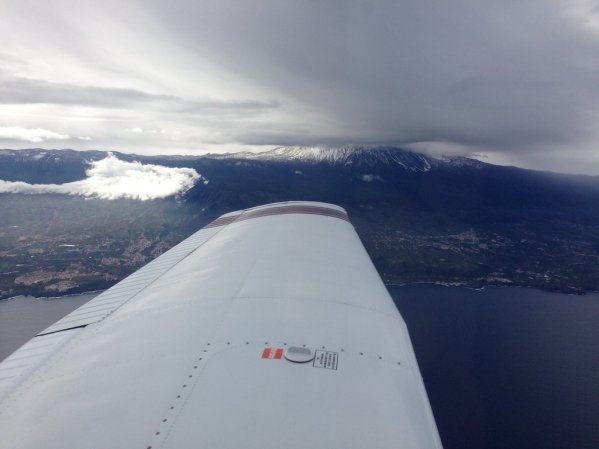
It is also a good experience to fly in a different regio than you are normally used to fly to gain more experience and to see how is the world of aviation in other countries.
Cessna/Reims 172 ready for the next flight

Let’s get some fresh air inside! 🙂

After arrival we spoke to the owner of the place we were staying at, and he gave me some information about a field from where some local company offers touristic flights… There was some hope that I would be able to fly around and log my first flight with a plane with croatian registration and croatian airports into my logbook.
The field is called Medulin Aerodrome (LDPM) and has a grass strip (RWY 12/30)  and a concrete taxiway.
It was very easy to find it, as they have exposed 2 written off planes on the hill, Piper Aztec and Cessna 150. They were from the local flying club which went bancrupcy. So at least somehow they are still serving for aviation purposes as a “decoration”.
Medulin Airport (LDPM)

Medulin Airport (LDPM)

After we spoke to the owner of the company we were able to make a flight on our discrection. As the hour costs 220€ in a Reims 172, I decided to fly only one hour only.
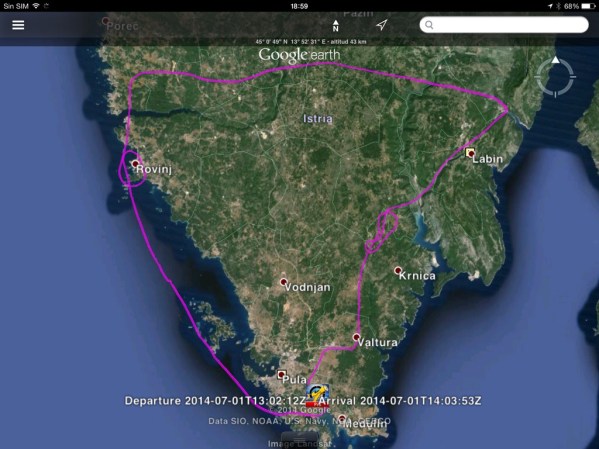
Our flight path

Our flight path

The one hour was sufficient and really worth of it. Could have been flying for longer, but it was simply to expensive. The owner flew with us as a security pilot and he gave us a lot of interesting information about the area and helped with the communications and navigation as well. The weather conditions and visibilty were outstanding with almost no wind.
I know, that if somebody flies for more than 20 years, that he probably (thinks that he) wouldn’t need a checklist, but I am used to read it and make a engine run-up before the departure and outside check as well. Makes me feel more comfortable and safe. This was not the case. And I know know a guy who had a similar problem on a plane because of ignoring the checklist…
The plane was refueled for approximately 01:20 hours and my question was: where is the reserve? He said, we have 3 airports near by and we are going to fly for one hour only, so it should be sufficient. (Checked the 2 tanks, and the right one was almost empty).
This is probably how they are flying the touristic flights as well… Hm, have my doubts about the correct procedures and the safety of the flight. Was not sure whether to abort the flight or not. Finally I decided to fly anyway and to hope that everything goes fine. (I did fine, otherwise I wouldn’t be writing now this post, lol).
The taxiway was from concrete and exactly as bright as the the Cessna’s landing gear, so I had to look good to stay on it and to not to taxi on the grass. Finally I thought we were going to depart from the grass strip, but following the owner’s instructions, after pulling the throttle to maximum, we were able to take of from the resting taxiway on the 160 meters… Wow! Airborne pretty fast!
Following the coastline we made the approach and low pass to the first field (LDPV), which was pretty impressive as it was situated behind a river on a small cliff. Unfortunately I have discovered that my Gopro turned off ( I had the videos from the previous flight during my holidays), so the most interesting part of the flight is missing…
Pula - sorry for the dirt windshield :-)

Pula – sorry for the dirt windshield 🙂

Rovinj from the air

Rovinj from the air

Next we crossed Istria to the west coast, than to the southeast and continued with our 2nd low pass on Pula Airport (LDPL).
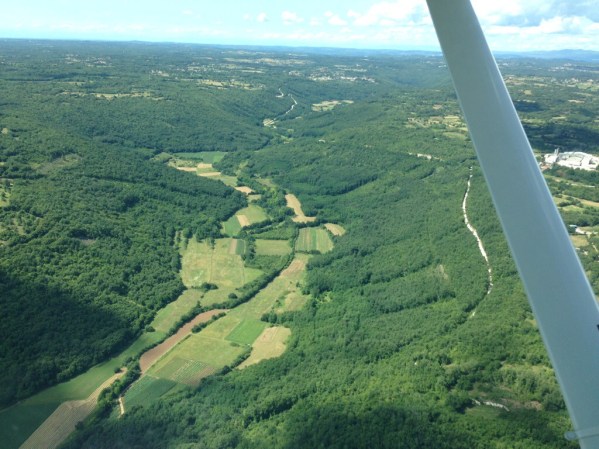
Crossing Istria to the East

Crossing Istria to the East

Somewhere near Hrboki

Somewhere near Hrboki

Flying along the Eastern Coast of Istria

Flying along the Eastern Coast of Istria

Low pass at Pula Airport (LDPL)

Low pass at Pula Airport (LDPL)

After the low approach we have returned back to the Medulin aerodrome (LPDM) for landing. Approaching at 65 kts with flap 10′ we have landed on the grass strip (RWY 12). Pretty nice experience to land on a grass strip (I am used to land on a concrete runways between 1.800-3.400 mtrs long).
Final RWY 30 at Medulin Airport (LDPM)

Final RWY 30 at Medulin Airport (LDPM)

I have enjoyed the flight a lot, also the coutryside and the experience. I am sure I would repeat it again and fly over to some othe parts of Croatia. I have to admit that the owner knows very well his plane and the area, and it was a nice flight and experience.
With my brother in law after the flight

With my brother in law after the flight

Here I share with you a short video from my short field take off at Medulin Aerodrome using the remaining 170 mtrs of concrete taxiway 🙂 Enjoy it!

Low pass on a piper archer 2 EC-JMT

I always wanted to have a picture taken by somebody of me flying a plane, and a friend of mine found it on internet. I asked the owner for permission to publish it, so here it comes:

It was taken back in February 2012 on the return flight from El Hierro (GCHI) to Tenerife North (GCXO). 

So this is me, flying low pass on a Piper Archer 2 (EC-JMT). Luckily this picture was not taken by a police because of speeding, lol 🙂

Piper Low pass

Piper Low pass

Credit to Manuel Estévez Low pass at GCTS

Inflight Entertainment

Yesterday I have absolved the second mission of my basic instrument flying module (BIFM).

Holding short of RWY 03L while Jetair's 737 is landing

Holding short of RWY 03L while Jetair’s 737 is landing

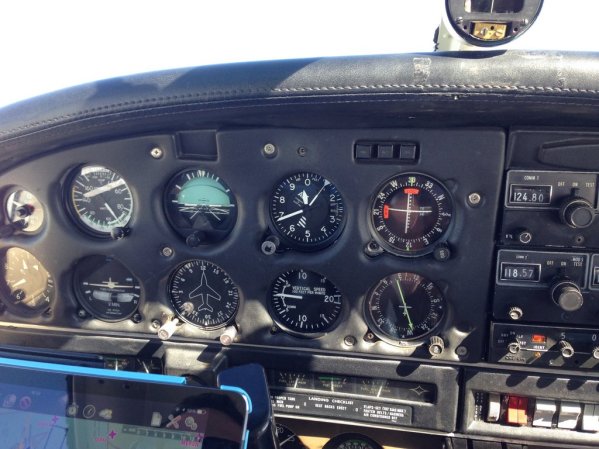
I am already starting to feel the difference between the first and second flight. I know what to expect from the plane which I wasn’t flying for almost 6 years and start to get more familiar with the airport as well. On the first time it was a combination of too many new things, which made it a bit more complicated. The manouvers helped me to learn to look inside the cockpit when flying into the clouds.

I feel I did some improvements since the first flight. It is easier to watch more than one instrument on time, to maintain a certain heading (however sometimes the plane still goes its own way, but we are working on it…), and to get orientated in the space without any visual references.

In the first mission I´ve basicaly stopped thinking about the Murphy’s law, that there is always a mountain hidden behind the cloud. I started to concentrate more on the instruments inside the cabin, without looking outside. Don’t want to get to confident, but I am simply feeling safer. 

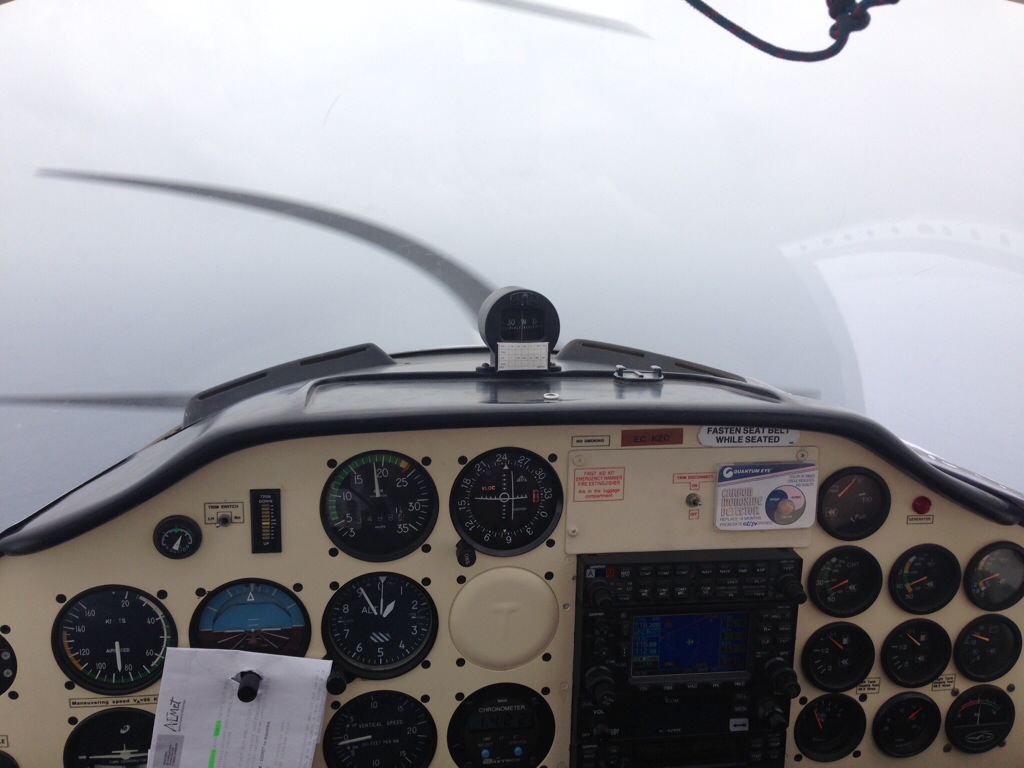
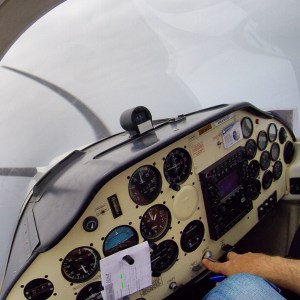
Today we have practiced some new manouvers; and the weather was just as perfect as during my first session! Clounds, clouds, clouds… Shortly after take off, my instructor covered the windshield, to not to get disctracted by looking outside.

My "inflight entertainment"

My “inflight entertainment” 🙂

I would say, actually I can´t believe that I am paying for having these kind of views from the plane, haha. I always wanted to fly to enjoy the views of the countryside and now I see this (lol). A good pilot is always learning, so it is definitely worth it! So this is my inflight entertainment, to look on a piece of a chart and a binder 🙂

Finaly we took the cover off from the windshield and we have continued the flight in real IMC conditions looking on the instruments inside the plane. It was “real”, as it should be. You can’t ask more than this, to have real IMC conditions on a place, where the sun is shinig more than 360 days a year…

Perfect IMC conditions

Perfect IMC conditions

Actually the whole week I was hoping to have this kind of weather; with clouds and poor visibility (on normal occassions when I fly I pray for CAVOK and good VFR weather).

In todays missions we have practiced descent and climb at 500ft/minute maintaining certain heading and speed and rate of descent/climb. It requires quite a lot of work and concentration. But once you discover how to do it right, it goes easier.

The important thing is to get used to scan/crosscheck all instruments at once and keep an eye on every instrument simultanously. Try to not to focus (stare) on one instrument only, otherwise the plane starts to go its own way.

We have made coordinated turns as well: take your current speed, divide it by 10 and add 7 degrees. This formula will give you the angle of bank to be maintained during the standard turn. 

After today´s flight I was not exhausted like during my first mission, but there is still a lot of work to be done. 
Actually somehow it makes fun. I know, that I am improving my skills and doing something for the safety of the flight.
The only strange thing is, that I haven´t seen anything at all during this 105 minute flight, as I was not able (allowed) to look outside. 🙂

I´ll have to work more on the interceptations of the radiala and I look forward to the next mission. 

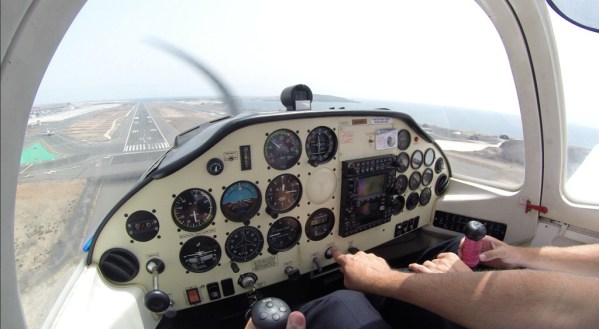
Turning on final RWY 03L

Turning on final RWY 03L

On final RWY 03L at Al Gando airport

On final RWY 03L at Al Gando airport

Today's route

Today’s route

I like quite a lot the debriefing. TO hear what went good, what went wrong, I can ask any doubt I have to a person who knows how it works. It is good to go back to the basics and refresh the knowledges.

A good thing is also to take notes from the debriefing; or record the flight. When you watch it at home, you detect things you could have done different way, and improve your skills before your next flight.

On the image of my today’s flight I can see that I haven’t applied correctly the wind correction when flying a certain radial, now I clearly see that I have to have it on my mind next time.

I would really recommend this course to every PPL pilot, actually it should be a part of the basic PPL training. I am quite sure it makes me a safer pilot. I would even love to make the whole IFR training, who knows, maybe in the future?

Safe landings!


200€ Cabbage soup

I have decided if possible, when abroad on holidays or on a trip, to make a flight in a this place to fly in a different environment that I am used to fly normaly.

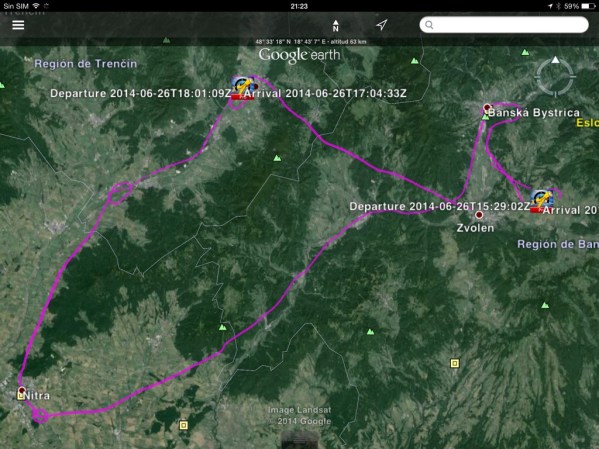
Today's route

Today’s route

On this manner I learn new airports, gain new experiences and discover different places and enjoy flying. On this visit of my homecountry Slovakia I wanted to fly along and above our highest mountains Tatra (2.655 mtrs ASL) and simply enjoy the views. Unfortunately the weather conditions were bad so we had to head the other direction and the mountains will have to wait till the next time. 

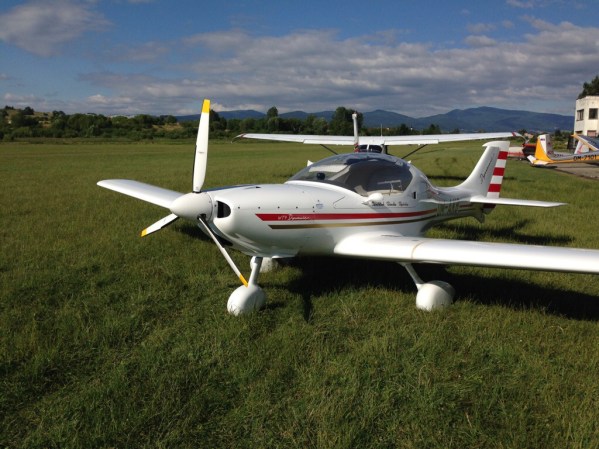
Dynamic WT-9 (OM-AKB), Ocova airstrip

Dynamic WT-9 (OM-AKB), Ocova airstrip

We took off around 18 hours local time from Ocova aerodrome (LZOC) from a nice grass strip (RWY 08) on board of a light plane Dynamic WT9 (OM-AKB) heading my hometown Banska Bystrica to take some pictures and to enjoy the views.
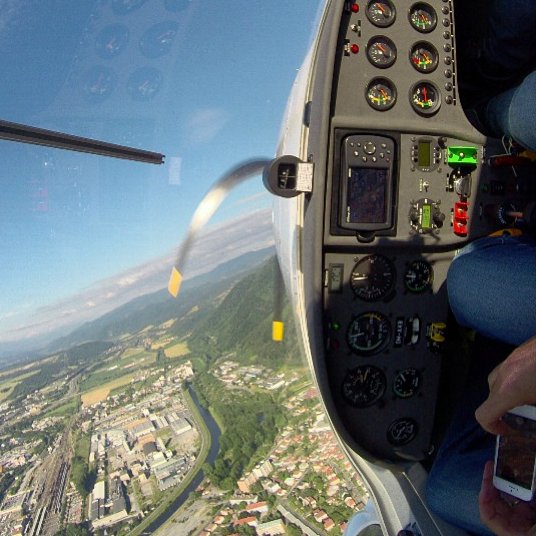
Over the city I handed over the controls to the safety pilot (FI as well) and he performed some steep turns so I could make better pictures 🙂 :-). It was fun to put the plane in this position.

Steep turn over Banska Bystrica

Steep turn over Banska Bystrica

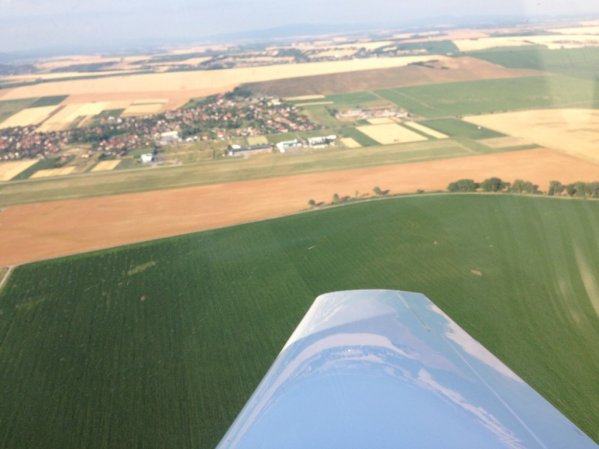
Following the highway and the gps we headed southwest to the City called Nitra (LZNI). As I am not used to fly from and to grass strips, it is for me more difficult to recognize the (air)fileds. To be honest, I was just above it and was still searching for it. 🙂 🙂

Nitra (air)field (LZNI)

Nitra (air)field (LZNI)

As there was nobody, we continued the flight to Partizanske (LZPT), made a low pass and continued to Bojnice. 

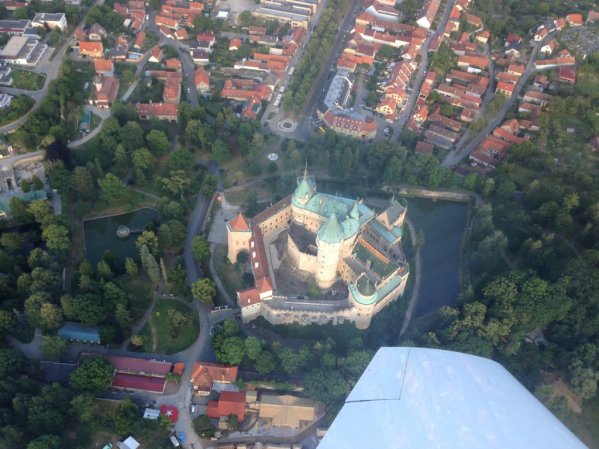
Castle Bojnice

Castle Bojnice

After two 360′ turns over Bojnice we took a couple of pictures and landed on the close Prievidza (LZPE) strip.
On this occassion I was able to spot the strip, which I was very proud of, but on final I was not sure, which part of this bright field is the part I should land on. Green is green, somehow everything looks the same. Haha

Landing at Prievidza (LZPE)

Landing at Prievidza (LZPE)

At this aifield there is the factory where our plane was made (Dynamic WT9).

Aeroklub Prievidza

Aeroklub Prievidza

I was realy surprised how good the local club restaurant was. After having a great cabbage soup, we continued our flight home. Initialy we have climbed up to 5.000 feet and flew over some nice mountains followed by descent and low pass on Sliac airport’s RWY 36 (LZSL).

Low Pass at Sliac Airport (LZSL)

Low Pass at Sliac Airport (LZSL)

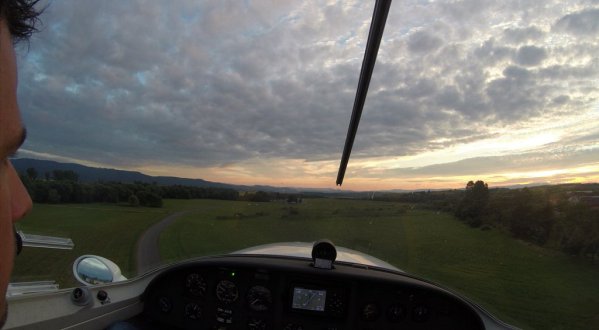
After departure right turn into the dusk and after a couple of minutes we have landed back in Ocova (LZOC). Can’t imagine any better idea how to spend an evening than going for a dinner to another airfield by a plane. 

Landing at Ocova at dusk

Landing at Ocova at dusk

Safe landings!

PS. The best thing is, that they are no landing fees to be paid on these grass strips!


Video from my flight El Berriel (GCLB) to La Gomera (GCGM)

In this video I have tried to compress my 1 hour and 20 minutes long flight from El Berriel (GCLB) to La Gomera (GCGM).
I was happy enough to enjoy this flight, there was no wind and the ATC were kind enough to let us climb up to FL 105.

As my friend has a Gopro too, we had in total 3 gopros on board (hopefully we won’t get any problems with weight and balance, lol), and I was able to edit a video from 3 different angles.

Here is my “masterpiece”, hope you´ll enjoy it! 🙂


Basic Instrument Flight Module (BIFM)

My initial intention was to make a Night VFR rating, because of these 2 reasons:

1. To gain experience flying without visual references and to improve the safety of the flight in the case of flying into not ‘best VFR flying conditions’

2. To land at night and enjoy the landing strip iluminated as a Christmas tree 🙂 🙂

So I think enough reasons to decide to go ahead with the training!

I was already so far to start with the night VFR training, when I spoke to the training center again and discovered even a better option: ‘Basic Instrument Flight Module (BIFM)’.

The BIFM forms a part of the instrumental flight rating course and you basically learn to fly without external visual references. During the course you practice horizontal flights, climbing, descending, turns in level flight, climbing, descending, recovery from unusual attitudes, stalls, etc.

It takes 10 flight hours to acomplish this course after which a certificate will be isued. If you decide to finish the IR course, you have already done the first 10 hours, and you just continue with the missing 45 hours.

I am doing the training at Canavia, and as the school is situated on the other island, to reduce the costs for moving around I try to do 2 missions at once (of total 10 missions).

As I am only VFR rated, I always look out the window for nice weather conditions. On the Canary Islands, you can basically fly 360 days in a year and just today, on the first training day, the weather was really not the best one ç(IMC conditions); a lot of fog and low clouds.

I phoned the FI to ask how he sees the situation and his answer was: “Perfect, as we are going to fly IR!” Wow, under normal circumstances we would have to cancel the flight.

As I knew the training should be done on a VFR rated aircraft (Tecnam Sierra), it sounded a bit strange to me to be flying without any references. However, I have done my PPL on this plane and it is equipped with a artificial horizon (very very helpfull) and a Garmin 430 as well (which we won’t be using during the flight), and VOR/ILS.

After I arrived at the Gran Canaria airport, where the school is situated (very recommendable, as they have very sharp prices and a good fleet), I’ve learned my FI Yeray, and after finishing necessary paperwork, we went down to the general aviation parking and started the preflight check of our Tecnam. Last time I flew on this ‘light aircraft’ was about 6 years ago and it is a bit different to fly a light plane like this in comparation to the Piper or Cessna I am normally used to fly.

We took off, and I literaly do not know where we have been during this 1:40 minutes long flight… Somewhere in fog, without looking outside (as I normally do)…

Flying in IMC conditions

Flying in IMC conditions

The first big difference after we left the airport was, that I had to start focus on the instruments inside without looking outside at all! Checking the horizon, heading (on the compass turns to the opposite direction than the gyro) and follow the outgoing radial of the VOR.

It was not necessary to wear the hood; there was nothing outside you could see! Fantastic weather to practice the flight!

Flying with no visual references

Flying with no visual references

We were practicing turns (10, 25, 30 degrees), descent and climb and leveled flight. You need to monitor several instruments at once and to be concentrated, otherwise the plane starts to go its own way…

The flight instructor used the conditions to skip a couple of lessons and to practice a stall and recovery from unusual situations. I had to look outside and he putted the plane in a turn and descent; my task was to recover it by looking on the artificial horizon.

Stalling the plane in normal conditions looking outside feels different than with no visual conditions. You actually do not realize that the plane is stalled, the stall horn warns you and you see it on the instruments.

Flying with no references requires pretty much concentration than flying around in a nice VFR weather, and I was actually pretty exhausted after this ‘short’ (1:40 min) flight. I am sure that the autopilot is a big help in this conditions. Besides this, I had to pay more attention to fly a plane I was not used to fly normally, and the turn coordinator was not working, so it added an additional work load to me. In the next missions we will train fault of some instruments as well, so it was not bad to fly like that. But maybe to many things together at the beginning.

The good think is that I have recorded the flight as well, so I can reproduce some of the manouvers in order to improve myself before the next mission starts. And this will be soon as well, so I look forward to the next training flight!

Flying makes fun!


Stalling a Cessna 172

We were flying with my friend around the island, he is a commercial pilot and instructor as well; and it seems that the flight was a bit “boring” for him without making any manouvers, stall recoveries, etc.

So he just asked me during the flight: “Can you make at least some stall or something to make it a bit more entertaining”?

My response was pulling back the throttle maintaining the altitude with the yoke and centering the plane with the pedals until the Cessna stalled, followed by the recovery. It is pretty amazing, how difficult it is to stall a Cessna, it stays simply hanging in the air… If I compare it to the P28A which I use to fly more often, the Piper would be a piece of a brick falling from the sky 😀😀😀 comparing to the Cessna. Somehowe after this couple of flights I am starting to like the Cessna as well.

I have recorded the stall recovery with the Gopro mounted in the cockpit; unfortunately forgot to delete the files from the Gopro hanging outside on the wing, so I was only able to take 2-3 pictures (grrr) with it. It was hanging outside for nothing (creating more drag). I will have to create my personal “gopro checklist” haha before going out for flying to avoid bad surprises like this one. However, I like those 2 pictures i’ve taken… Quality before quantity (a good excuse), haha.


Somewhere over La Victoria, North Tenerife

Somewhere over La Victoria, North Tenerife

It seemed that stalling Cessna was not enough so we have said: “engine failure”!  Why not? First set the best gliding speed (around 70 kts) and searched for a field to land. Pretty difficult on a hilly volcanic island like Tenerife…


Searching for a field to land

Searching for a field to land

The first and probably best option to avoid ditching in the sea was a golf course. We were gliding from 4’500 feet for a while and were trying to calculate the approach taking in consideration the weather conditions, etc. (we had a tailwind, so after the final turn we could be short of the field and…. do not think about the worse…).

When on the final of the golf field (almost with the golf players in sight), we have performed a go around and continued with the island tour. It was a very good excersise; sometimes it is necessary to go back to the basics and train the emergency procedures.

The funny thing is that a couple of days later a friend of mine who was playing on the course that day asked me: “Were you flying on saturday?” I answered, yes, it was me 😀😀😀. “I was thinking to hit you with the ball”, he said… I thought probably he recognized my flying technique ;-).

Enjoy the 20 sec short video…

Safe landings!


200 Euro Paella

The most of us are flying to enjoy the 100$ hamburgers. In Spain we could speak about something similar, as for example “100$ paella”.

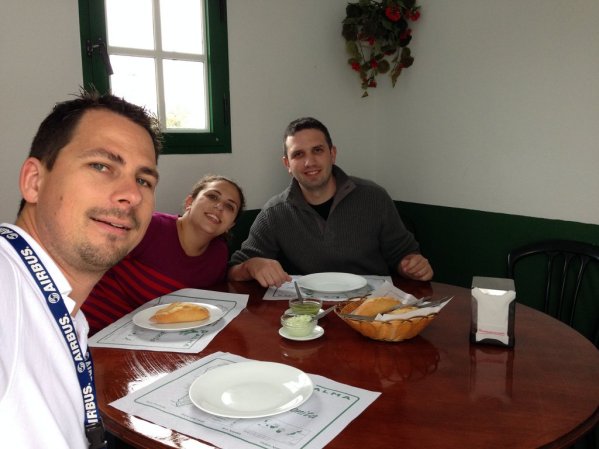
My last flight went to La Palma, together with my friend Daldo and his wife Virginia as passenger.

Today's crew

Today’s crew

I was flying the inbound leg and we were cruising at 8,500-9,000 feet. Pretty nice views over the Atlantic Ocean, the sea was very calm, but we were having some headwinds of 20 kts which made this flight a bit longer and of course a bit more expensive ;-), that is why I speak about 200€ paella ;-).

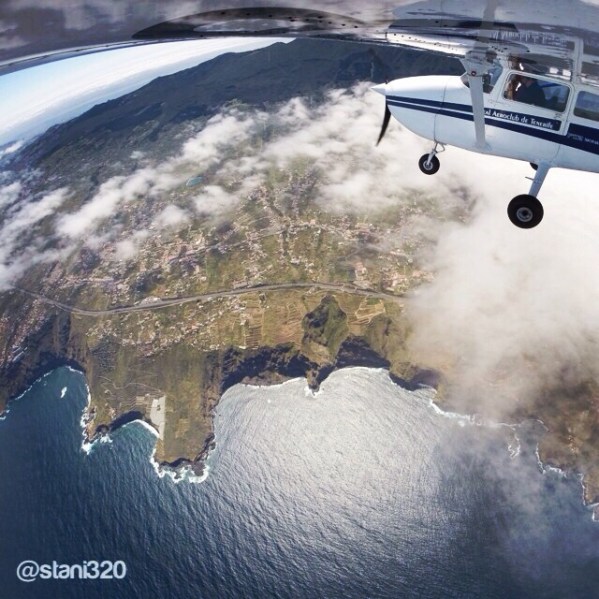
Some different views of Tenerife

Some different views of Tenerife

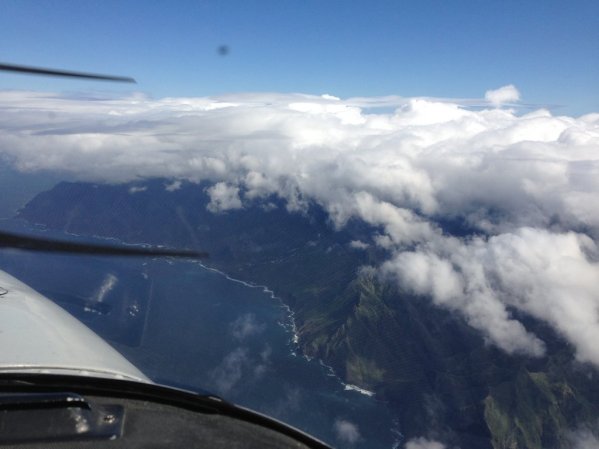
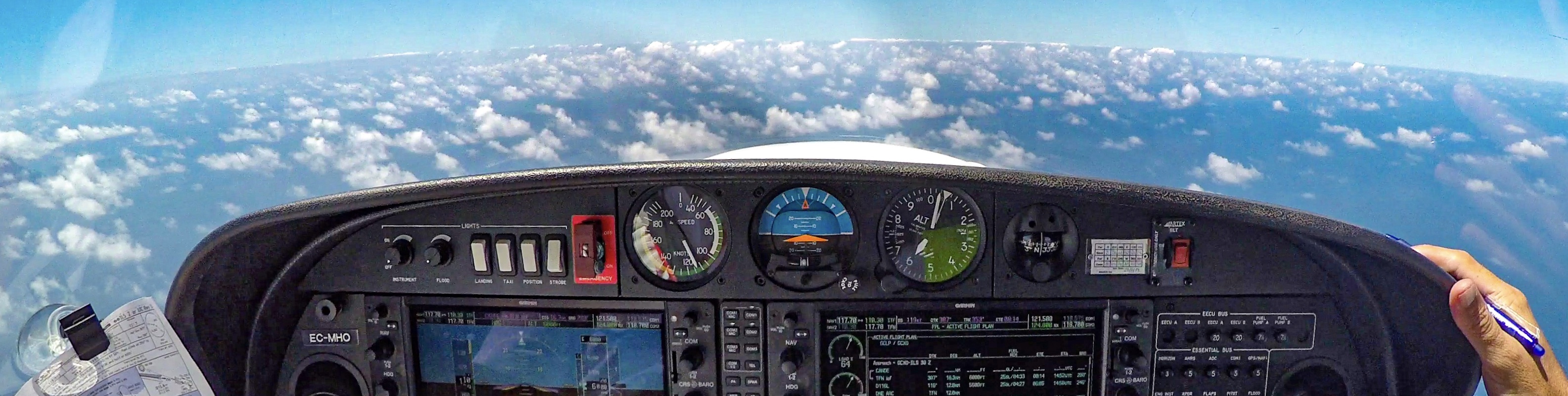
Actually I enjoy flying high(er), as there is normaly less turbulence and you can enjoy better views. Also, in the case of an engine failure, the range of possibities of gliding or trying to restart it, are better, as you gain time. And also, you feel like you are flying a real arliner ;-). So there are only a advantages of flying at higher altitudes.

Cruising at 8,600 feet

Cruising at 8,600 feet (Sorry for the bad quality)

The icing was forecasted for this day at 9,000 feetm the OAT was around 2 degrees, but no ice was forming on the wings. We were cheching it constantly, for just in case, however we were not flying in the clouds and the day was pretty sunny as well.

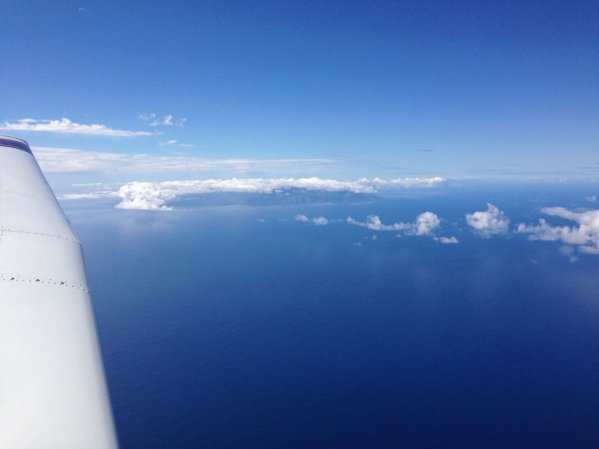
Passing La Gomera island

Passing La Gomera island

Cruising over the ocean at 9,500"

Cruising over the  Atlantic ocean at 9,500″

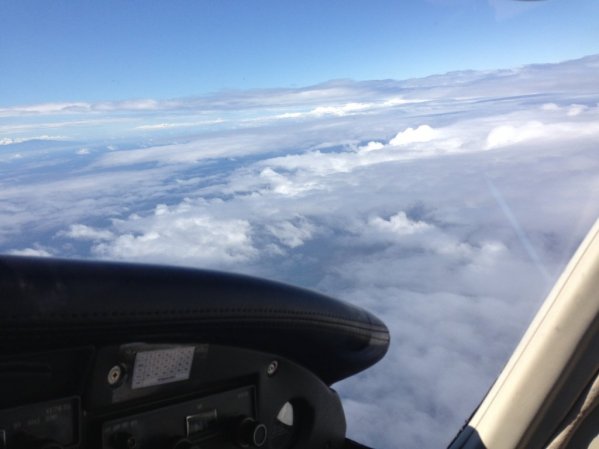
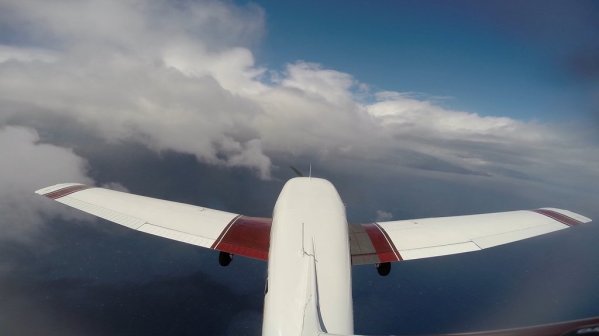
Reaching La Palma island we have maintained 9,000 feet and made some cloudsurfing. The weather forecast for today was some rain and also a front was comming from NW. We have decided to do this flight anyway, as the visibility was ok, no clouds were in sight, and in the case the weather would starting to change, we would return back to our base airport.

Flying our the clouds

Flying over the clouds, reaching La Palma island

Cloudsurfing over La Palma and the rainbow

Cloudsurfing over La Palma and the rainbow

After this short cloudsurfing, we have started our descent to the visual point Sierra, in the south of the island. Being so high took as a while to descent and make some nice manouvers between the clouds.

Descending through the clouds

Descending through the clouds

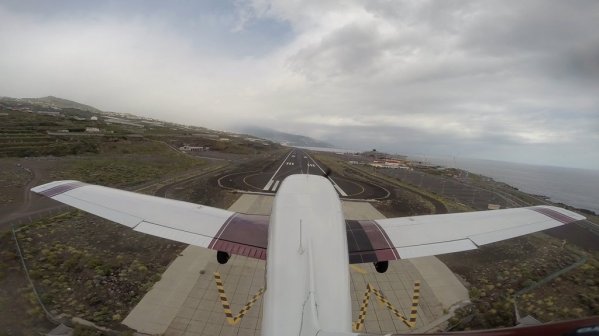
Finaly after 1,30 hour long flight we have landed at the La Palma’s “El Mazo Airport”. This airport is considered one of the world’s most complicated approaches, however with its 2,2 km long runway it is nothing special for our Piper ;-).

Seconds before landing at La Palma

Seconds before landing at La Palma

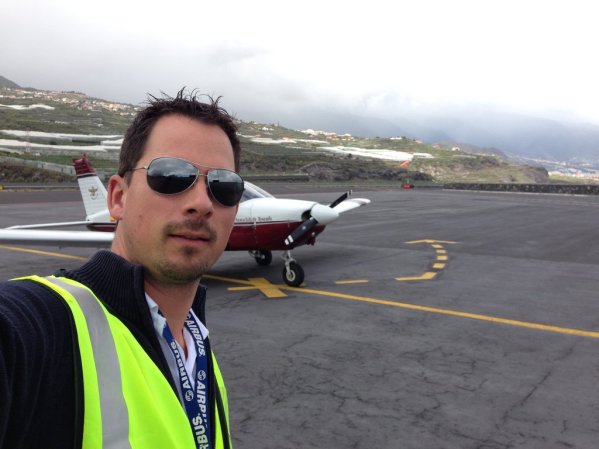
Our Piper was parked as it should on a nice place, where even an Airbus 330/340 could be parked. A realy big honor for this plane ;-).

Just a quick selfie to prove that it was parked there and I was there as well ;-)

Just a quick selfie to prove that the Piper was parked on the A330 stand and that I was there as well 😉

We knew, that we had not much time, as the storm was comming sooner or later, so we have decided to go quickly to the restaurant Casa Goyo, situated under the extended centerline of the runway, just between the extended centerline´s lights. They have a lot of specialities, good quality-price relationship and also very good seafood. This restaurant is situated in a walking distance from the airport, some 10 minutes.

Restaurante Casa Goyo La Palma

Restaurante Casa Goyo La Palma

It consists of small wooden houses, where you can sit, or small rooms, where you can enjoy some privacy as well. We had some paella, which was already ready and we didn’t had to wait, as we had to be pretty quick. So to come over to La Palma to eat this small plate of paella costs around 200€ ;-); not to shabby 😉

Inside the restuarant

Inside the restuarant (bad qualiry foto, grrr)

This one is better ;-)

This one is better 😉 Waiting for the paella.

After the lunch we took a taxi (6€) and we hurried up back to the airport to pay the taxes (18€), made our new flight plane and departed direction Tenerife. There were pretty much clouds than earlier this day, so Daldo had to climb up to 10,000 feet and fly around the clouds to avoid them. The views were even more spectacular.

Cruising at 9,700"

Cruising at 9,700″ Pretty awesome, isn’t it?

Flying between the clouds

Flying between the clouds

Flying over clouds at 9,700"

Flying over clouds at 9,700″

The north coast of Tenerife can be seen through the clouds

The north coast of Tenerife can be seen through the clouds

Anaga

Anaga

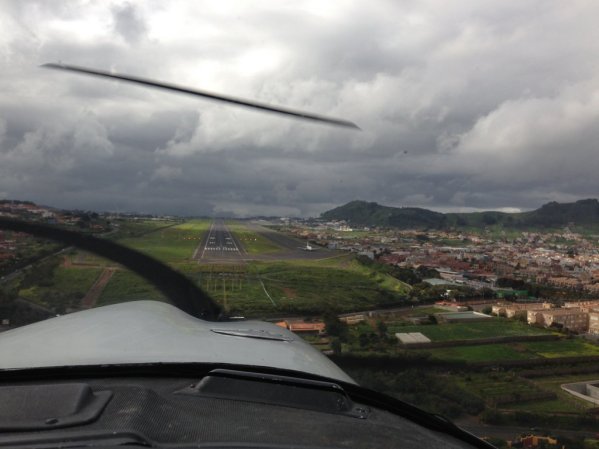
On final RWY 30 at Tenerife North Airport

On final RWY 30 at Tenerife North Airport

Only a couple of minutes later after our landing, when the plane was parked outside the hangar, it started to rain and the visibility dropped down significantly. This was a perfect planning, in the other case we would have had diverted to the alternative Tenerife south airport.

The Piper is parked outside the hangar and the rain is comming

The Piper is parked outside the hangar and the rain is comming

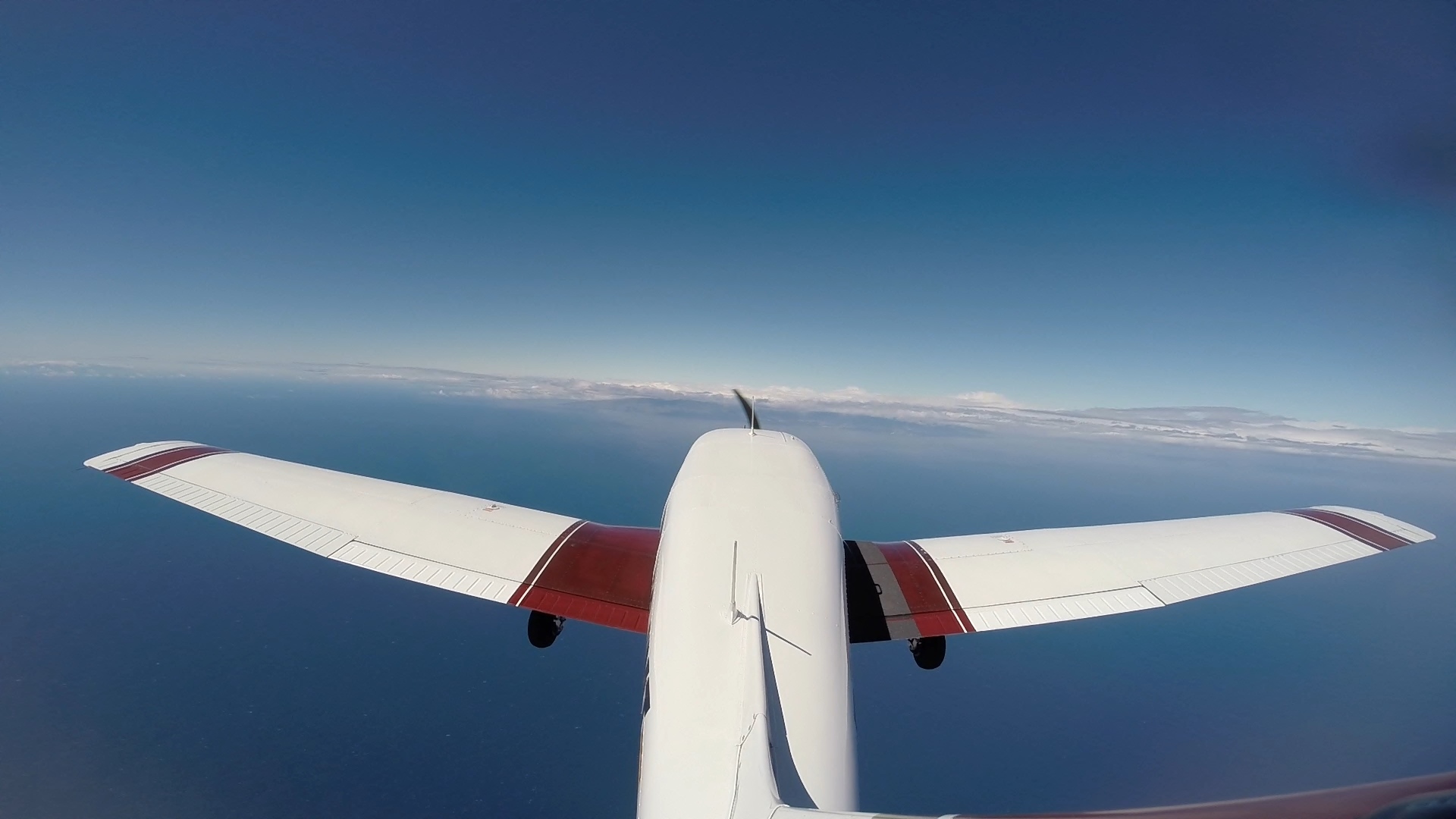
A short video of the descent, cloudsurfing, approach and landing at the La Palma Airport. The Gopro has been mounted on tail of the plane.

We have returned a washed and clean airplane 😉

Safe landings!